
Strong on the Trail Starts in the Gym


Because hiking will humble you… respectfully.
There’s this idea that hiking is just walking. And to be fair, technically it is. But anyone who has stepped onto a real trail knows it is a very different kind of walk.
It's the incline that keeps going when you thought it would level out. It's the uneven ground that forces you to actually pay attention. It's the distance that has you questioning your life choices about halfway through.
And somewhere between that first step and the last mile, you realize something important. The difference between getting through a hike and actually enjoying it often comes down to how prepared your body is before you even get there.
For us, it has never been just about showing up. It is about showing up ready.
Why Training Matters
Hiking is a full-body experience, whether people realize it or not. It's not just your legs doing the work. Your balance, your core, your endurance, and your overall strength are all working together at the same time.
When you train with intention, things start to feel different, you're not as winded. You feel more stable. Your body holds up better over time, and instead of counting down the steps until it is over, you actually get to enjoy where you are.
Because let’s be honest, nobody joins a hike thinking, “I hope I struggle the whole time.”
If we are asking our bodies to carry us for miles, up hills, and across unpredictable terrain, we owe it to ourselves to prepare them.
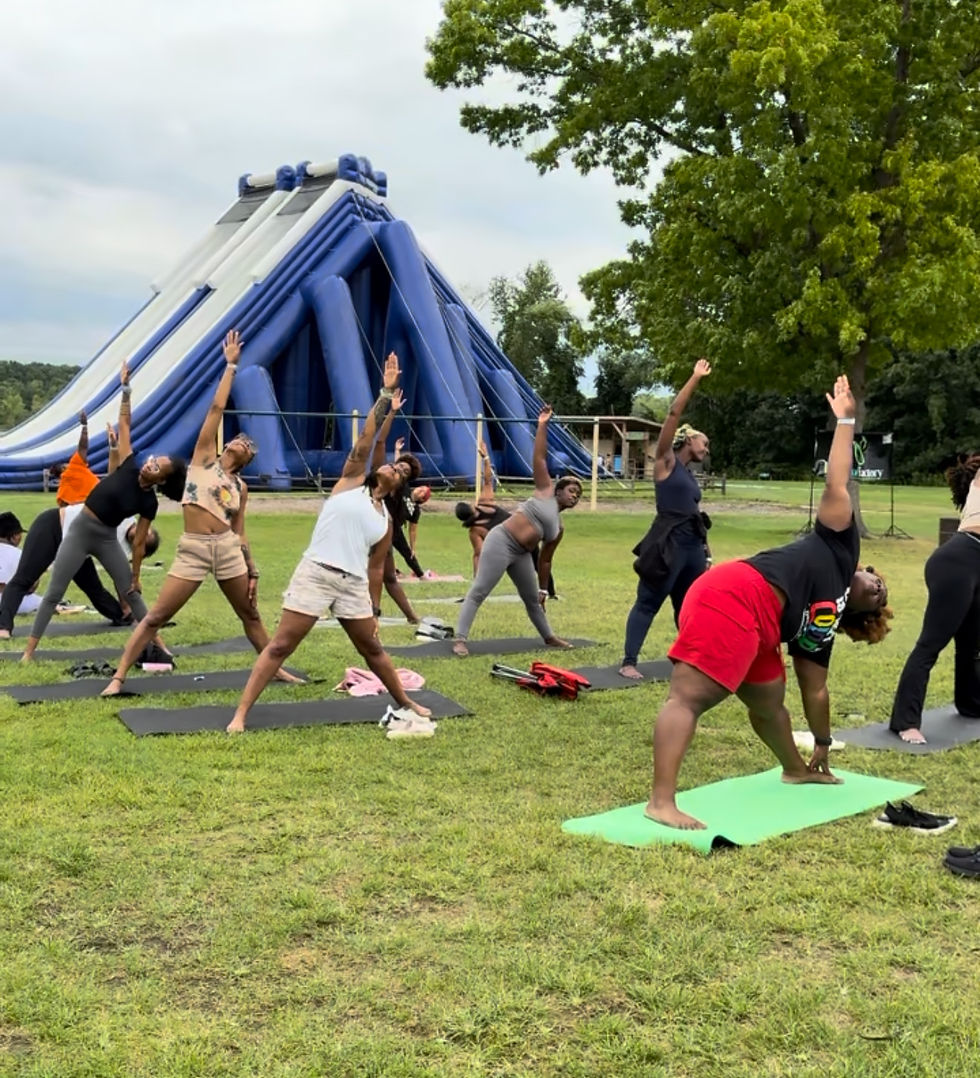
Know Your Limits, Protect Your Body
As important as training is, knowing your limits is just as important.
Not every kind of discomfort is a good sign. There is a difference between feeling challenged and feeling pain. Sharp pinches, sudden pulls, aching joints, or anything that feels off should not be ignored.
Your body will always tell you what it needs, the question is whether you are listening. Adjusting is not weakness, it's awareness.
That might look like lowering the weight, shortening your workout, slowing your pace, or simply taking a break. There is nothing impressive about pushing through the wrong kind of pain and ending up sidelined later.
Knowing your limits allows you to make smarter, safer decisions. Not just for yourself, but for the people you are out there with. When we are on the trail together, we are looking out for one another.
Safety and health will always come first. Always.
The Muscles That Matter Most on the Trail

Legs: Your Foundation
Your legs are doing majority of the work. Every incline, every step, every mile adds up quickly.
If your legs are not prepared, the trail will let you know almost immediately.
Beginner Gym Workout
Squats, 3 sets of 10
Leg Press, 3 sets of 10
Walking Lunges, 2 rounds
Step-Ups onto a bench, 2 sets of 10 each leg
At-Home Alternative
Bodyweight Squats, 3 sets of 12
Reverse Lunges, 3 sets of 10 each leg
Stair Step-Ups, 2 sets of 10 each leg
Wall Sit, 2 rounds of 30 to 45 seconds
When that hill shows up uninvited, your legs will decide how the rest of your hike goes.
Glutes: Power and Protection
Your glutes are doing more behind the scenes than you might think. They help stabilize your hips, support your knees, and give you the power to move forward, especially on climbs.
When they are not activated, other parts of your body start picking up the slack. That is usually when discomfort starts making an appearance.
Beginner Gym Workout
Hip Thrusts, 3 sets of 10
Cable Kickbacks, 2 sets of 12 each leg
Bulgarian Split Squats, 2 sets of 8 each leg
At-Home Alternative
Glute Bridges, 3 sets of 12
Donkey Kicks, 2 sets of 12 each leg
Step-Back Lunges, 2 sets of 10 each leg
Your glutes are either helping you or quietly setting you up for a long day.
Core: Balance and Control
Your core is what keeps everything steady. And on a trail, steady matters.
Uneven terrain, sudden shifts in footing, even carrying a backpack all rely on your core to keep you balanced and upright.
Beginner Gym Workout
Planks, 3 rounds of 20 to 30 seconds
Cable Crunches, 3 sets of 12
Seated Twists, 2 sets of 12
At-Home Alternative
Plank Hold, 3 rounds of 20 to 30 seconds
Dead Bugs, 2 sets of 10
Russian Twists, 2 sets of 12
It is not just about moving forward. It is about staying in control while you do it.

Ankles and Calves: The Underrated Essentials
This is the part people overlook until it is too late.
Your ankles and calves are constantly working to stabilize you every step on uneven ground depends on them doing their job properly. One wrong step can change everything, so strengthening this area is not optional.
Beginner Gym Workout
Standing Calf Raises, 3 sets of 12
Seated Calf Raises, 2 sets of 12
Incline Treadmill Walk, 5 to 10 minutes
At-Home Alternative
Calf Raises, 3 sets of 15
Single-Leg Balance Hold, 2 rounds of 20 seconds each leg
Light Hops or Jump Rope, 2 rounds of 30 seconds
Strong ankles help keep you steady, and steady is what keeps you going.
More Than Just the Hike
What we are building goes beyond the trail.
We want people to feel strong, confident, and capable. Not just during a hike, but in everyday life because training is not about being perfect. It is about being prepared.
It is about trusting your body to do what you are asking it to do.
So, when we step onto those trails together, it is not just about finishing. It's about feeling good while we do it.
What To Remember
You do not have to be an expert to get started. You do not need the perfect routine or the perfect schedule.
You just need to start.
A little strength. A little consistency. A little intention.
Because the trail will always be there. The question is, how do you want to experience it?
And when you are ready, we will be right there with you.


Comments